We live in the overshoot era
A global circular economy will allow us to fulfil people's needs with only 70% of the materials we now extract and use—moving human activity back within the safe limits of the planet.
Circular solutions embedded across four global systems can deliver this goal.
Circular solutions embedded across four global systems can deliver this goal.
The Circularity Gap Report 2023
: Official launch video
For the first time, we are excited to collaborate with Deloitte to explore tangible solutions and how we can collaborate across the private and public sectors to drive systemic change.



Scroll for the full story

Many businesses, cities and nations have already blazed the trail.
Discover solutions & case studies


The global economy is now only 7.2% circular
The global situation is getting worse year on year—driven by rising material extraction and use.
Rising material extraction has shrunk global circularity: from 9.1% in 2018, to 8.6% 2020, and now 7.2% in 2023. This leaves a huge Circularity Gap: the globe almost exclusively relies on new (virgin) materials.
This means that more than 90% of materials are either wasted, lost or remain unavailable for reuse for years as they are locked into long-lasting stock such as buildings and machinery.
Rising material extraction has shrunk global circularity: from 9.1% in 2018, to 8.6% 2020, and now 7.2% in 2023. This leaves a huge Circularity Gap: the globe almost exclusively relies on new (virgin) materials.
This means that more than 90% of materials are either wasted, lost or remain unavailable for reuse for years as they are locked into long-lasting stock such as buildings and machinery.
Materials that are cycled back into the global economy after the end of their useful life, otherwise known as secondary materials, account for 7.2% of all material inputs into the economy—this is the Circularity Metric.
material extraction is rising every year
Each year we have smashed through the planet’s safe environmental limits. Today, five of the nine key ‘planetary boundaries’ that measure environmental health across land, water and air have been broken.
A circular economy could reverse this by reducing global material extraction and use by one-third.
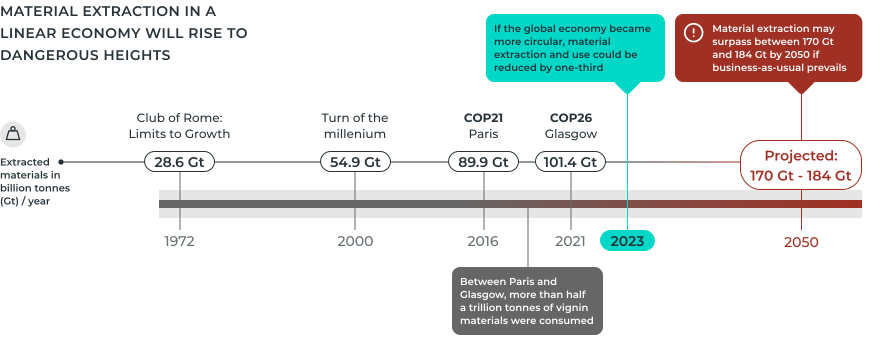
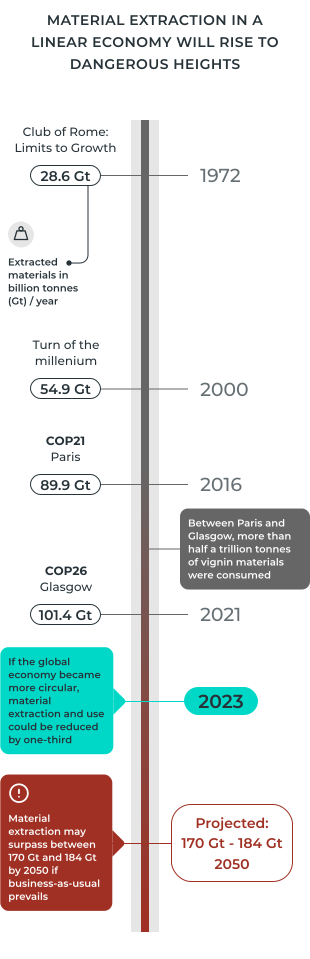
This is not safe. Not for the planet, nor for people
Increasing material consumption does not always lead to better conditions for people, as it degrades the very systems we rely on to live. The take-make-waste economy saps natural resources, threatens the survival of species, fills soil and water with toxins and dangerously warms the Earth.
Our analysis finds that circular solutions across four key systems can reverse the overshoot that we now have, allowing us to satisfy people’s needs within the safe limits of the planet.
Our analysis finds that circular solutions across four key systems can reverse the overshoot that we now have, allowing us to satisfy people’s needs within the safe limits of the planet.

Hover over the planetary boundaries to discover how circular solutions can reverse the overshoot

Click on each section to read more
To bring human activity back within the safe limits of the planet, we estimate that we would need to reduce global material extraction and consumption by one-third
. This sounds like a huge task, but we can achieve it if we embed circular solutions across four key global systems.
How? With four key circular actions:
USE LESS, USE LONGER, USE AGAIN AND MAKE CLEAN
USE LESS, USE LONGER, USE AGAIN AND MAKE CLEAN
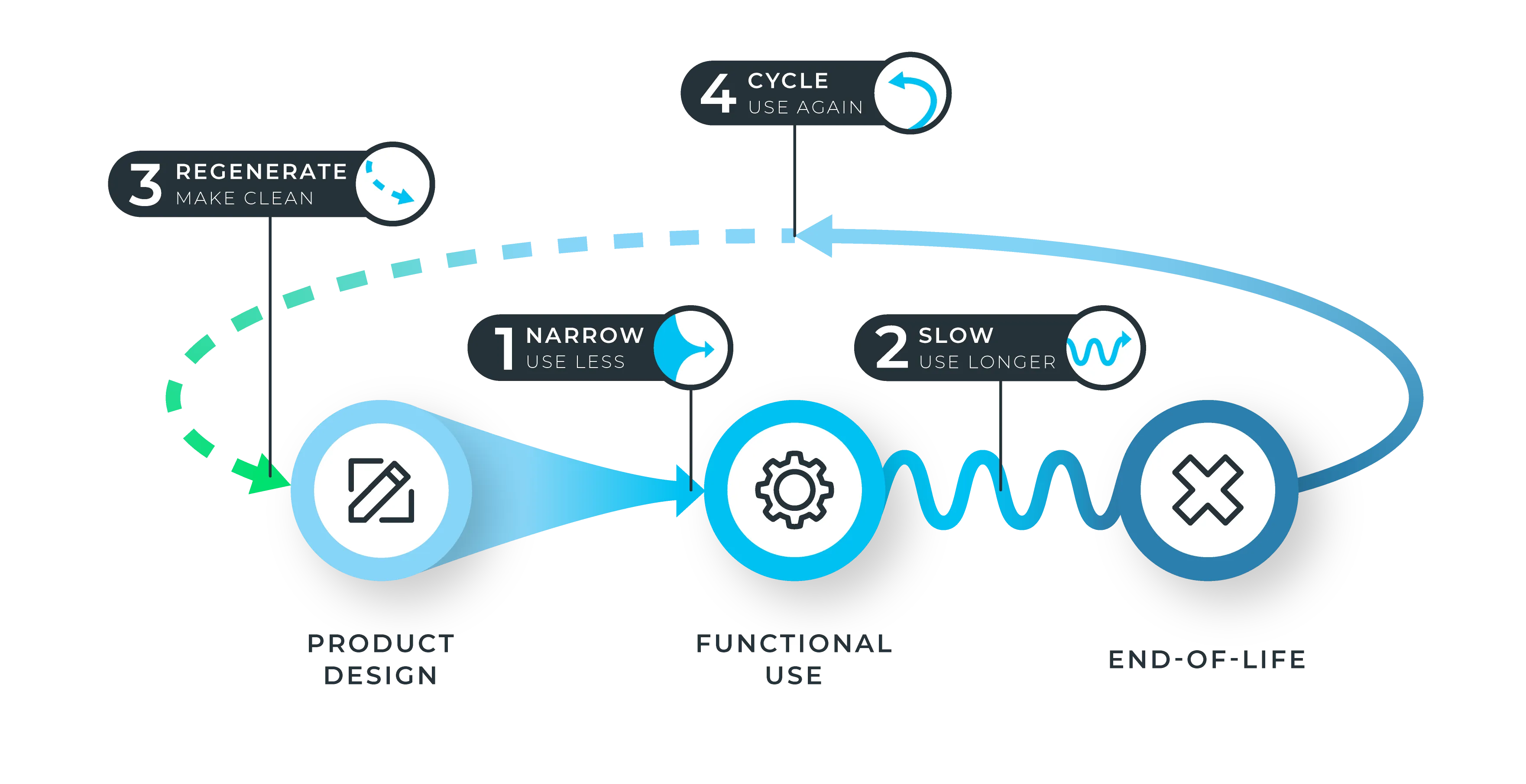
The graphic above depicts the four flows to achieve circular objectives:
narrow, slow, regenerate and cycle
. The four objectives are based on the work of Bocken et al. (2016)
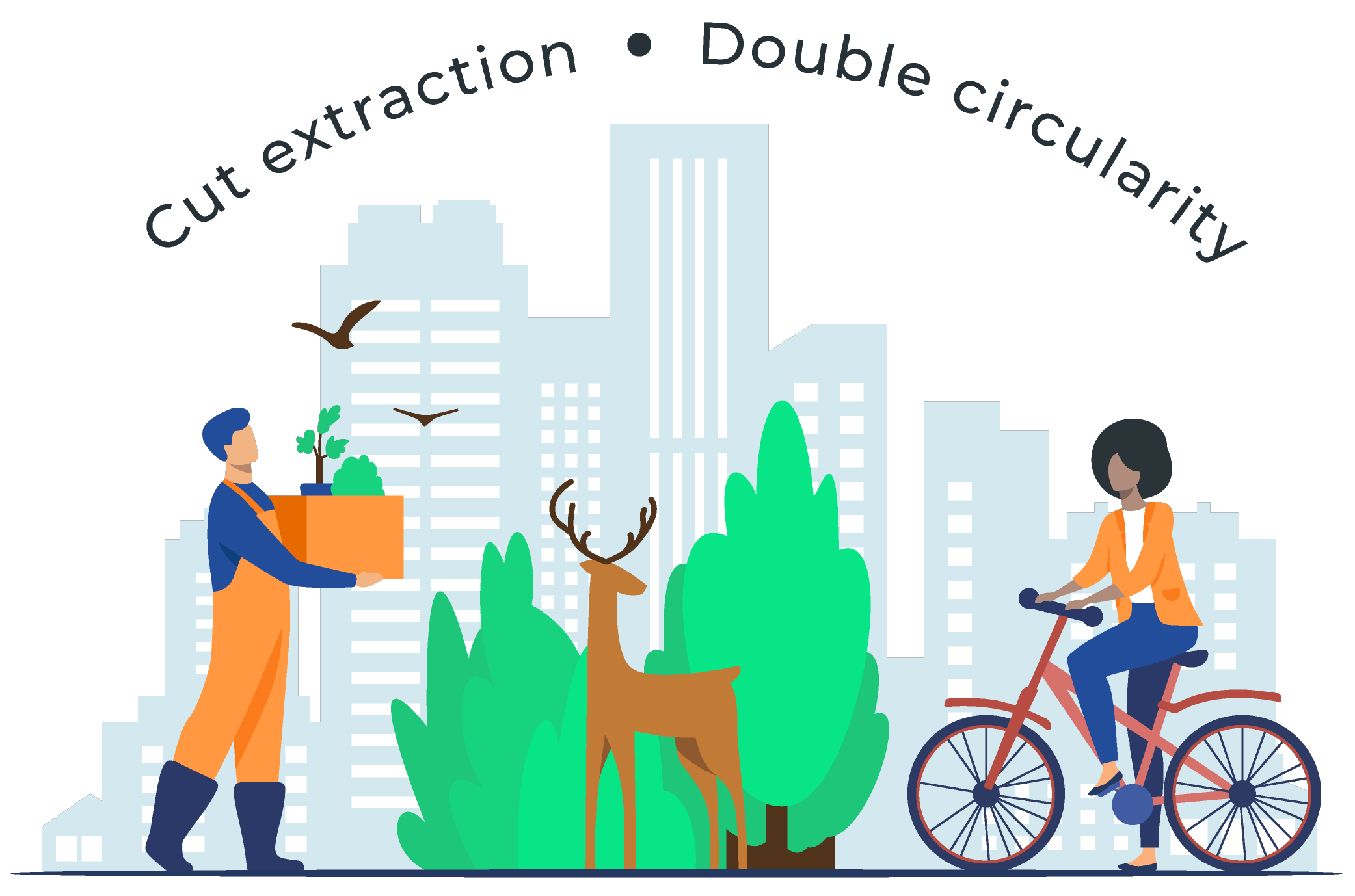
Together, circular solutions applied on a global scale can:
Keep the planetary boundaries within safe limits
Limit the global temperature rise to within 2-degrees
Limit the global temperature rise to within 2-degrees
With every business, city and nation embarking on their circular journey, we are bringing humanity back within the safe limits of our planet.
endorsers

Circularity is a critical enabler to decreasing our GHG emissions and addressing material scarcity issues, while building a growing and resilient economy. Businesses are increasingly realising the symbiotic opportunities of circular operating and business models for growth while building resilience in their supply chains. The Circularity Gap Report has provided valuable insights on how we are progressing circular transformation to achieve our wider growth and sustainability goals.
– Kristin Hughes, Resource Circularity Director,
Executive Committee Member, World Economic Forum
Executive Committee Member, World Economic Forum
Humanity has to learn to live within planetary boundaries. When we decouple economic growth from resource use, prevent and reduce waste, use recycled materials instead of primary raw materials and boost circular business models, we can do it. By making our economy fully circular, we create new jobs, accelerate innovation, and at the same time fight the climate and biodiversity crises. With the Green Deal, Europe is now leading the circularity transition. But we challenge others to beat us: in the race to save the future of humanity there can only be winners. The Circularity Gap Report 2023 is a call to action for all parts of the world and a great source of inspiration for everyone who’s ready to build the economy of tomorrow. The future economy is circular!
– Frans Timmermans. Vice President, European Commision